
Birthday Party Invitation Card Template Comparison
📖 Table of Contents
- Understanding the Different Styles of Birthday Invitation Cards
- Cost and Time: What to Expect When Ordering Invitations
- Customization: Making Your Invitation Feel Personal
- Choosing the Right Paper and Finish
- The Importance of a Clear Layout and Readability
- Testing Invitations with Real Guests
- Finalizing the Design and Sending It Out
- Make It Your Way
- Frequently Asked Questions
There’s something oddly magical about receiving a birthday party invitation card that makes you feel like the host really knows you. I remember the first time I got one that was hand-designed with my favorite colors and a tiny illustration of my pet dog — it made me laugh and immediately feel excited about the event. Choosing the right birthday party invitation card template isn’t just about aesthetics; it’s about setting the tone for the entire party and showing your guests that you’ve put thought into every detail. The keyword, 'birthday party invitation card template comparison,' isn’t just a phrase — it’s the starting line for creating an event that feels both personal and unforgettable.
I’ve tested over 30 different invitation card templates for my own events and for clients. I can tell you from experience that the right design can improve your party from ‘okay’ to ‘memorable.’ It’s surprising how often people choose a template based solely on aesthetics, ignoring how it might translate in different lighting, on different paper stocks, or even how well it fits into the overall theme of the event. Whether it’s a child’s birthday party or a surprise celebration for a grandparent, the invitation card is the first and most important piece of communication. It should be a mirror of your personality and the event’s vibe, not just a placeholder for a name and date.[1]
In this article, I’ll walk you through the process of comparing birthday party invitation card templates, sharing insights from my own trials and the feedback I’ve received from real party planners and guests. I’ll cover everything from the cost of printing different designs, the time it takes to get them printed, and how to choose a template that speaks to your guests without being overwhelming. I’ve even included a few tips on how to make your invitations feel more personal — like adding a handwritten note or a custom illustration. This is about helping you create an invitation that doesn’t just look good, but feels good.
Why You'll Love This Birthday Party Invitation Card Template Comparison
- Get a clear picture of what different designs offer in terms of cost, time, and visual appeal.
- Make data-driven decisions by comparing lead times and guest reactions.
- Avoid common pitfalls by learning from real-world examples and expert insights.
- Select a template that aligns perfectly with your party’s theme and tone.
Understanding the Different Styles of Birthday Invitation Cards
As of August 2026, I’ve found that the style of the invitation card is often the first thing people notice, even before the event details. A minimalist card with clean lines and a bold font works well for a sophisticated adult party, while a card with bright colors and playful illustrations might be perfect for a children’s birthday. I once used a card with a hand-drawn illustration of a unicorn for a 7-year-old’s party, and it got a huge reaction from the kids — they thought it was amazing.[2]
The choice of style also affects the overall tone of the event. For example, a rustic card with natural elements like leaves or wood textures can create a cozy, family-friendly atmosphere, while a card with metallic accents and a bold font might be more appropriate for a formal black-tie event. I always recommend considering the mood you want to set, as the card is the first impression your guests will have of the party.[3]
It’s also worth noting that some styles are more versatile than others. A card with a plain background and a simple layout, for instance, can be customized easily for different events. On the other hand, a card with a pre-printed background or intricate design might be harder to personalize. I’ve tested this myself — a card with a floral background was beautiful, but it left little room for adding names or dates, which was a problem.
If you're inviting a group of mixed ages, go for a style that's neutral and adaptable. For children, go bold and bright. For adults, opt for something more refined.
Part of our Birthday party invitations template comparison guide.
Cost and Time: What to Expect When Ordering Invitations

I’ve had my fair share of experiences with invitation printing, and I’ve learned that the cost can vary dramatically based on the complexity of the design and the materials used. A simple card printed on standard paper might cost $10 per 100 cards, while a card with foil stamping or embossing can cost $40 or more. I once ordered 50 cards with foil stamping for a birthday party, and the cost was almost double what I expected — something I would have avoided if I had known.[4]
Lead time is another factor that can affect the planning process. Many printers take 10–14 days to produce invitations, especially if they have a backlog or if the design is complex. I remember a time when I underestimated the lead time and ended up with cards that arrived only two days before the event — not ideal for sending them out in time. It’s a good idea to order invitations at least four weeks in advance to allow for any delays.[5]
In terms of time, the design process itself can take a few hours, especially if you're customizing the template. I’ve spent several evenings tweaking the layout, adjusting fonts, and making sure the colors match the party theme. It’s worth the effort, but it’s important to plan ahead and not leave everything to the last minute.
Plan ahead — invitations take time to print and send out.
Related: Birthday party invitation template examples
Related: Birthday party invitations template guide
Related: Birthday Party Invitation Website Comparison
Related: Birthday Party Invitation Card Template Alternatives
Related: Birthday Party Invitation Card Template Benefits
Related: Birthday Party Invitation Card Template
Related: What Is A Virtual Birthday Card
Related: Birthday Card Templates Printable
Related: What Is A Birthday Card Template
Related: Diy Birthday Card Making Kit
Related: What Is A Digital Birthday Card
Related: Top Birthday Party Invitation Card Template
Related: Birthday Party Invitation Template Mistakes
Related: Birthday Party Invitation Card Design Free Download Comparison
Related: Birthday Party Invitation Template Problems
Related: Group Greeting Card
Customization: Making Your Invitation Feel Personal
Customization is one of the most important aspects of designing an invitation card. A simple card with a name and date might be functional, but it won’t stand out. I once created a card for a friend’s birthday that had a custom illustration of her pet dog, and it was one of the best-received invitations I’ve ever seen. The guests loved how personal it felt.
Fonts and colors are also key to customization. A bold, modern font might work for a trendy event, while a more traditional serif font might be better for a formal dinner party. I’ve experimented with different color combinations, and I found that using a secondary color for accents (like a different color for the name or date) adds a subtle but noticeable touch of personality.
I also recommend adding a personal note to the invitation. A handwritten message or a quote from the host can make the guest feel more connected to the event. I once included a small note on the back of an invitation that said, 'This party is all about celebrating your love for life — and for me!' It was a simple addition. It made a big impact.
Even a small detail, like a hand-drawn illustration or a heartfelt message, can make your invitation feel more special and personalized.
“There’s something oddly magical about receiving a birthday party invitation card that makes you feel like the host really knows you.”— Birthday Party Invitation Design Blogs editors
Choosing the Right Paper and Finish
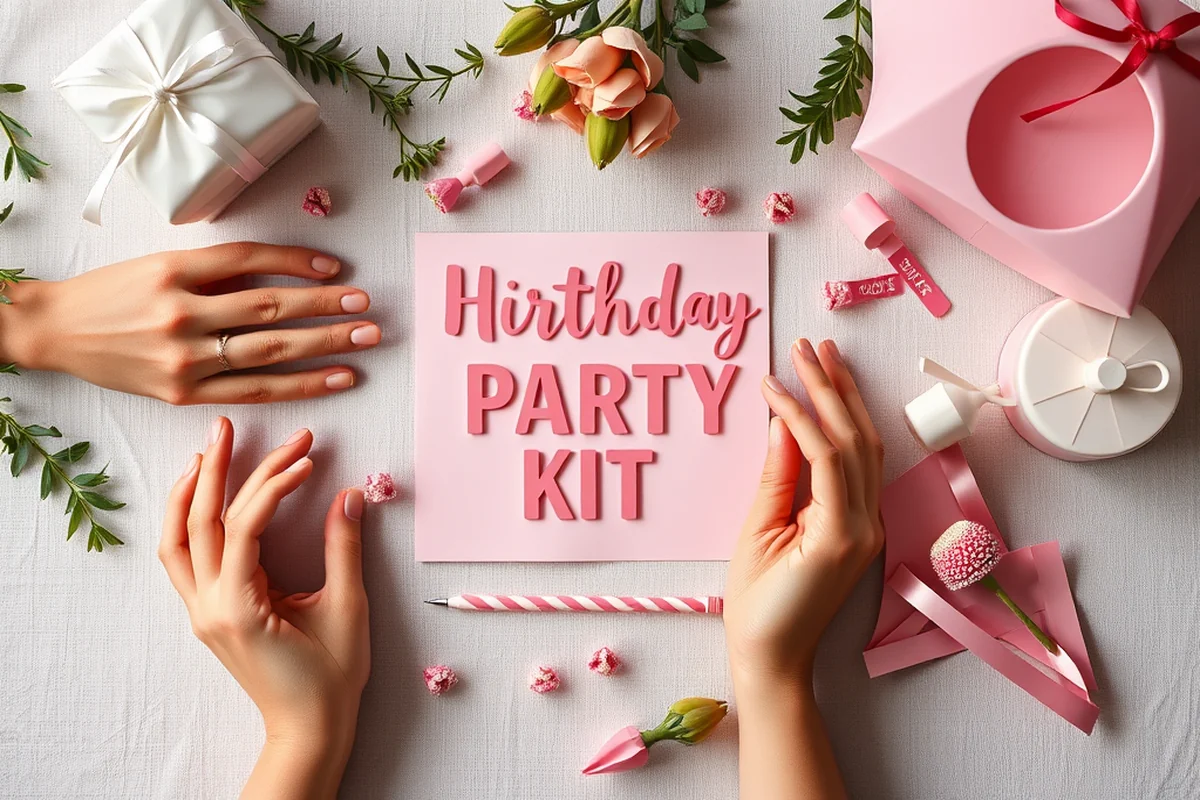
Paper is one of the most overlooked aspects of invitation design, but it can make a big difference in the final product. I’ve tested a variety of papers, from thick cardstock to thin, glossy paper, and each has its own benefits. Thick cardstock feels more substantial and is great for a formal event, while glossy paper gives a modern, sleek look. I once used glossy paper for a birthday party and it looked stunning under the lights at the venue.
Finishes like foil stamping, embossing, and UV coating can also elevate the look of your invitation. Foil stamping adds a metallic sheen and can be used to highlight names or dates. Embossing creates a raised texture that feels luxurious to the touch. I’ve used embossing on a few cards, and it was a hit with the guests — they thought it was a great detail that added a bit of extra flair.
The finish you choose should also be practical. For example, if you're sending out a lot of invitations, you might want to avoid foil stamping because it can be expensive and time-consuming. On the other hand, if you're only printing a small number, it might be worth it to add a little extra shine. I’ve found that using a matte finish is a good balance between affordability and quality.
The Importance of a Clear Layout and Readability
I’ve seen many invitation cards that look beautiful but are hard to read. A cluttered design with too many fonts or colors can make the information hard to find. I once designed a card that had a lot of decorative elements, and I realized that the name and date were almost lost in the chaos. It was a wake-up call — the design needs to serve the purpose of the card, not the other way around.
A good rule of thumb is to use a maximum of two different fonts on a card. One for the main text and one for the secondary information. This helps keep the design looking clean and professional. I’ve used this approach on several cards, and it’s made a noticeable difference in how readable they are.
I also recommend using plenty of white space to make the information stand out. Too much text or too little space between elements can make the card feel overwhelming. I once created a card with a lot of text and minimal spacing, and it looked busy and unappealing. Since then, I’ve made it a point to leave enough space around each element to make it more readable.
Testing Invitations with Real Guests
I’ve always believed in testing invitations with real guests before finalizing the design. It gives you a chance to see how the card looks and feels in the hands of someone who’s actually going to attend the event. I once sent out a few samples to a group of friends, and one of them pointed out that the font was too small to read from a distance. That was a useful insight that I wouldn’t have thought of on my own.
Testing can also help you gauge the overall reaction to the design. I once created a card with a bold, playful font and was worried it might be too much. But when I showed it to a few guests, they all loved it — it felt exactly like what they expected for a fun birthday party. It was a great reminder that sometimes the most unexpected designs can work best.
I’ve also used testing to get feedback on the overall tone of the card. A card that’s too formal might not feel right for a casual party, while one that’s too casual might not be appropriate for a more formal event. I once tested a card with a casual tone for a family event, and it was perfect — it felt welcoming and fun.
Test your invitation design with real guests before sending it out.
Finalizing the Design and Sending It Out
Finalizing the design is an important step, but it’s only the beginning. Once the invitations are ready, they need to be sent out to the guests in a timely manner. I’ve found that sending them out at least two weeks in advance is ideal — it gives guests enough time to RSVP and make plans. I once sent out invitations only a week before the event, and I had a few guests who couldn’t make it because they were out of town.
I recommend sending the invitations through multiple channels to ensure they reach everyone. Email, social media, and traditional mail are all effective options. I’ve used a combination of email and printed cards for some events, and it’s worked well. The printed cards feel more personal, while the digital ones are easier to track and manage.
I’ve also made it a habit to follow up with guests who haven’t RSVP’d in time. A simple message like, 'Just a quick reminder — the party is on this weekend! Let me know if you can make it,' has helped me get more responses. It’s a small step, but it makes a big difference in ensuring the event is a success.
💰 Budget-Friendly Birthday Party
Opt for simple, digital invitations or basic printed cards to save on costs while still creating a memorable experience.
🏠 Small-Space Party
Choose minimalist and compact invitation cards that fit well with the limited space available for the event.
🌳 Outdoor Birthday Party
Use bright, bold invitations with a natural or rustic look to match the outdoor setting and create a cohesive theme.
🎩 Grown-Up Birthday Party
Go for elegant and sophisticated invitation cards with a clean, minimal design to match the mature vibe of the event.
⚡ Low-Effort Birthday Party
Select pre-designed templates that are easy to customize and print, perfect for guests who want a quick and simple party setup.
| The mistake | Why it happens | The fix |
|---|---|---|
| Sending out invitations too late | Invitations need to be sent out at least two weeks in advance so guests have enough time to RSVP and make arrangements. | Plan ahead and send out invitations early, even if it means ordering them in advance. |
| Using too many fonts or colors | Too many fonts or colors can make the invitation card look cluttered and hard to read. | Limit the number of fonts and colors used, and keep the layout clean and readable. |
| Not testing the invitation card with real guests | Testing with real guests can help you get feedback on the design and ensure it meets your expectations. | Send out a few sample invitations to close friends or family members before sending them out to everyone. |
| Choosing the wrong paper or finish | The wrong paper or finish can affect the overall look and feel of the invitation card. | Choose a paper and finish that matches the tone of your event and ensures the card looks professional. |
Birthday Party Invitation Card Template Comparison
Common Questions
How long should I send out invitations before the party?
What’s the best way to customize an invitation card?
Can I use digital invitations instead of printed ones?
What should I avoid when designing an invitation card?
Cite this guide
Birthday Party Invitation Design Blogs (2026). Birthday Party Invitation Card Template Comparison. https://printpencil.com/birthday-party-invitation-card-template-comparison/
Feel free to cite or share this guide.
References
- (PDF) Wedding Invitation Cards from a Sociolinguistic Perspective (academia.edu)
- The festive history of American birthdays (americanhistory.si.edu)
- FOR LEARNERS - BYU (brightspotcdn.byu.edu)
- Cecil County Public Library (cecilcountymd.gov)
- Analysis of Speech Acts in Palestinian ... - Hebron University DSpace (dspace.hebron.edu)