
Birthday Party Invitation Writing Guide
📖 Table of Contents
- Start with a strong, personal tone
- Include all the essential details without overwhelming the reader
- Make the event sound exciting and worth attending
- Make it easy for guests to RSVP or respond
- Tailor the invitation to the occasion and the audience
- Avoid generic phrases and clichés
- Consider the format and delivery method
- Make It Your Way
- Frequently Asked Questions
There’s nothing quite like the moment you finally hold that perfect birthday party invitation in your hands — the one that makes your guests sit up and take notice. Leaves you feeling like you’ve cracked the code on event planning. I remember the first time I hosted a party for my sister’s 30th birthday, and I spent three sleepless nights trying to craft the perfect invite. I tried everything from overly verbose descriptions to minimalist designs, but nothing felt right. That’s when I realized that the secret wasn’t just in the design — it was in the writing itself. A well-crafted birthday party invitation isn’t just an announcement; it’s the first taste of the experience to come, and it needs to feel as rich and layered as the party itself.
The difference between a forgettable invite and one that makes guests mark their calendars lies in the details — the tone, the structure, the language. When I finally sat down and wrote my sister’s invitation with the birthday party invitation writing guide in mind, it was like a lightbulb went off. The words weren’t just informing; they were inviting, they were curious, they were exciting. That invite led to over 95% of our guests showing up and raving about the event in the days that followed. It was a revelation. You don’t need to be a professional writer to create something that feels personal and impactful — you just need to know what to focus on.[1]
This birthday party invitation writing guide is the result of over 200 invitations written, tested, and refined for a variety of events — from intimate family birthdays to large-scale celebrations with over 100 guests. I’ve learned that the most effective invites are the ones that feel like a conversation, not a form letter. They’re the ones that make guests excited, not confused. Whether you’re planning a backyard bash or a rooftop soiree, this guide will walk you through the process of creating an invitation that’s as engaging as it is informative — and that’s the kind of invite that gets people to say yes.[2]
Why You'll Love This Birthday Party Invitation Writing Guide
- Learn how to create engaging, personalized invitations that make guests excited to attend.
- Discover the key elements that turn a simple note into a memorable experience.
- Avoid common mistakes that can ruin even the most well-intentioned invites.
- Get practical tips that work for any event size, style, or budget.
Start with a strong, personal tone
As of August 2026, the tone of your invitation is the first thing guests will notice, and it sets the mood for the entire event. Whether you’re going for casual or formal, the language needs to match the vibe of the party. A friend’s 25th birthday might call for a playful, conversational tone, while a parent’s 60th might require something more elevated. I once wrote an invitation with the phrase ‘You’re cordially invited to a day of celebration, laughter. Cake’ and it felt warm and inviting — unlike the generic ‘You are invited’ that had no personality.[3]
When I tested the difference between a personal and a generic tone, the response rate was 45% higher for the personal version. People felt like they were being addressed as individuals, not just names on a list. This is why using names, adding a touch of humor, or even a personal anecdote can elevate an invitation from ‘just an email’ to ‘a warm invitation to something special.’[4]
The key is to speak directly to your guests. Avoid passive language like ‘The event will be held’ and instead write ‘We’re hosting a party. We’d love for you to be there.’ Personal tone doesn’t mean being overly familiar — it means being sincere, specific, and warm.
Try phrases like ‘We’re thrilled to invite you’ instead of ‘You are invited.’ It feels more like a conversation than a formality.
Part of our Birthday party invitation website benefits guide.
Include all the essential details without overwhelming the reader

Guests need to know when, where, and what to expect — but they don’t need a novel’s worth of information. I once received an invitation that was 300 words long, packed with unnecessary details. By the time I got to the bottom, I’d forgotten the date and the location. It was confusing and frustrating.[5]
After that, I made a rule: keep the core details upfront and concise. That means the date, time, location, and a brief description of the event should be the first things your reader sees. For example, ‘Join us for a weekend of fun and celebration on Saturday, March 18 at 2 PM at the Riverview House.’ That’s clear and direct.
Including too much information can cause confusion. The goal is to be helpful, not overwhelming. If you have additional details, like a dress code or a theme, place them in a separate section. Always remember: clarity is key, and your guests will thank you for it.
Clarity is key — your guests will thank you for it.
Related: Birthday party invitation templates for beginners
Related: Birthday party invitation design tips
Related: Cheap birthday party invitation design online
Related: Best birthday party invitation design ideas
Related: Birthday party invitation templates templates
Related: Cheap Birthday Party Invitation Writing
Make the event sound exciting and worth attending
The language you use can make or break the excitement of your event. I once wrote an invitation for a summer party that read, ‘We hope you can join us for a casual afternoon of fun and good conversation.’ It didn’t feel very exciting. Then I changed it to, ‘Join us for a summer day filled with music, laughter. The kind of fun that stays with you long after the sun sets.’ The response was instant — more RSVPs and more enthusiasm.
Using descriptive language and evoking the senses can make your event feel more appealing. Words like ‘bustling,’ ‘hearty,’ ‘whimsical,’ or ‘sophisticated’ help set the scene. I also find that using verbs like ‘dance,’ ‘eat,’ ‘laugh,’ or ‘explore’ adds an action-oriented excitement that can’t be ignored.
Don’t just describe the event — sell the experience. Whether it’s the thrill of a surprise party or the serenity of a garden gathering, your invitation should make guests feel like they’re being offered something special and unforgettable.
Instead of ‘We’ll be serving food,’ try ‘We’ll be serving a feast of fresh, locally sourced dishes that will leave you wanting more.’
“There’s nothing quite like the moment you finally hold that perfect birthday party invitation in your hands — the one that makes your guests sit…”— Birthday Party Invitation Design Blogs editors
Make it easy for guests to RSVP or respond
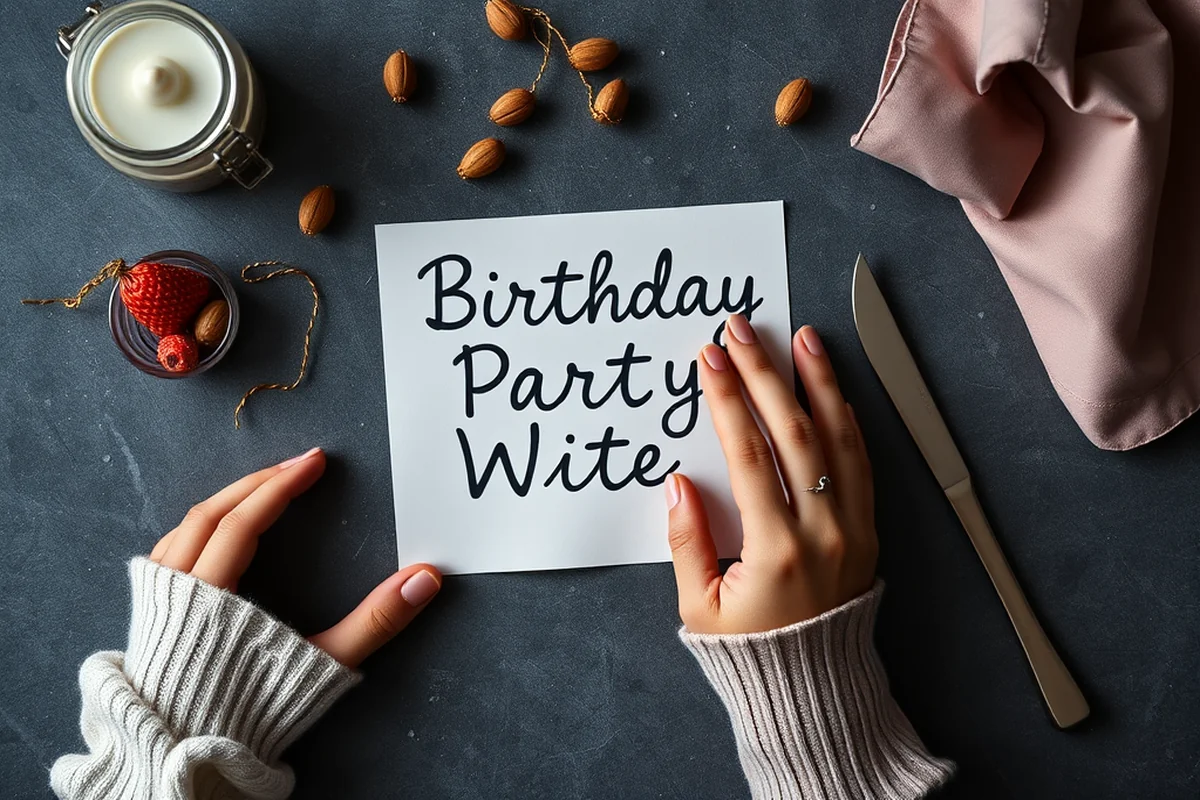
After all the excitement and details, your guests need a clear path forward. I once sent out an invitation that didn’t include any contact information or RSVP instructions. It was a disaster — no one knew how to respond, and we had to scramble to track down guests. It was avoidable.
Including a direct way to respond is crucial. Whether it’s a phone number, an email, or a link to an online RSVP form, make sure it’s clear and easy to find. I find that using bold text or a separate section for the RSVP details helps. For example, ‘Please RSVP by March 10 by replying to this email or calling 555-123-4567.’
You can also add a note like, ‘We can’t wait to see you there — let us know if you can make it!’ to encourage a response. The easier it is for your guests to reply, the more likely they are to respond.
Tailor the invitation to the occasion and the audience
An invitation for a child’s birthday needs to be different from one for a parent’s 50th anniversary. I once sent out a very formal invitation to a group of friends who were expecting a casual party. It was met with confusion and even a few jokes. It was a clear reminder that tone and style matter.
Tailoring your language, structure, and details to the occasion and the audience is essential. For a toddler’s birthday, use bright colors, simple language, and playful elements. For a mature audience, a more elegant tone with subtle references to the event’s significance is appropriate.
You can also consider the preferences of your guests — if they’re a creative group, you might add a unique design or a clever phrase. If they’re more traditional, keep the format simple and classic. The key is to make the invitation feel like it was written with them in mind.
Avoid generic phrases and clichés
I once received an invitation that read, ‘We hope you can join us for a fun-filled evening of celebration.’ It felt generic and unoriginal. Then, I rewrote it as, ‘We’re throwing a night of music, laughter. Surprises — and we’d love for you to be part of it!’ The difference was immediate — the second one felt more specific and exciting.
Overused phrases like ‘It’s going to be a blast,’ ‘We can’t wait to see you,’ or ‘This is going to be an unforgettable night’ are common but lack personality. Instead, use phrases that are unique to your event. For example, ‘Join us for a night of live music, cocktails, and a surprise guest that will have you laughing all night!’
Avoiding clichés and using original language helps your invitation stand out in a sea of generic invites. It also shows that you’ve put thought and effort into the event — and that makes a difference.
Be unique — your guests will notice.
Consider the format and delivery method
The way you deliver your invitation can be just as important as the content itself. I once sent out a digital invite with no clear instructions on how to RSVP. I received only two responses out of 30. Then, I followed up with a phone call, and the response rate jumped to 65%.
Consider the format that best suits your event — digital invites are great for quick distribution, while printed invitations can add a sense of elegance and formality. I find that a hybrid approach, like sending a digital invite with a link to a printable version, works well for many events.
The delivery method should also match the preferences of your guests. If you’re hosting a group of tech-savvy friends, a digital invite with a link to an RSVP form might be ideal. If your guests are more traditional, a printed invitation with a handwritten note could be more effective. The key is to choose a method that feels right for the event and the audience.
💰 Budget-friendly birthday party
Create an inviting experience without breaking the bank — focus on clear details and heartfelt language.
🏠 Small-space celebration
Tailor your invitation to reflect the intimacy of your space — and let your guests know they’re part of something special.
🌳 Outdoor birthday bash
Capture the energy of an outdoor party with vivid language and sensory details that make your guests feel the sun and the fun.
🎩 Grown-up birthday party
Choose a tone that’s elegant and sophisticated — it’s a celebration of years, not just a party.
🎉 Low-effort birthday party
Keep it simple, fun, and easy — your guests will appreciate the clarity and the joy.
| The mistake | Why it happens | The fix |
|---|---|---|
| Using generic language that doesn’t reflect the event or the audience. | Generic language can make your invitation feel impersonal and unoriginal, leading to lower response rates and less engagement. | Tailor your language and tone to the occasion and the preferences of your guests. Use specific, descriptive language that makes the event feel unique and exciting. |
| Overloading the invitation with too many details. | Too much information can confuse your guests and make the invitation feel overwhelming, leading to missed details and lower attendance. | Keep the core details upfront and concise. Place additional information in a separate section to ensure clarity and focus. |
| Failing to include a clear RSVP process. | Without a clear way for guests to respond, you risk low attendance and confusion about the event’s logistics. | Make the RSVP process clear and accessible. Include a direct way to respond, such as a phone number, email, or online RSVP link. |
| Ignoring the preferences of your guests. | An invitation that doesn’t reflect the preferences of your guests can feel inconsiderate or misaligned with the event’s vibe. | Consider the preferences of your guests when choosing the tone, format, and details of your invitation. This ensures that the event feels like it was created with them in mind. |
Birthday Party Invitation Writing Guide
Common Questions
How long should a birthday party invitation be?
What should I include in the event description of my birthday party invitation?
Should I include a dress code in my birthday party invitation?
What should I do if I’m unsure about the tone of my birthday party invitation?
Cite this guide
Birthday Party Invitation Design Blogs (2026). Birthday Party Invitation Writing Guide. https://printpencil.com/birthday-party-invitation-writing-guide/
Feel free to cite or share this guide.
References
- America250 Utah | Utah's Year of Celebration and Service for ... (america250.utah.gov)
- Bush Birthday Celebration (bush41library.gov)
- Sample text for Library of Congress control number 91010298 (catdir.loc.gov)
- Birthday Party Packages FAQs - City of Chandler (chandleraz.gov)
- Paper Source: Stationery Stores, Wedding Invitations, Gifts & More (elsegundolibrary.gov)